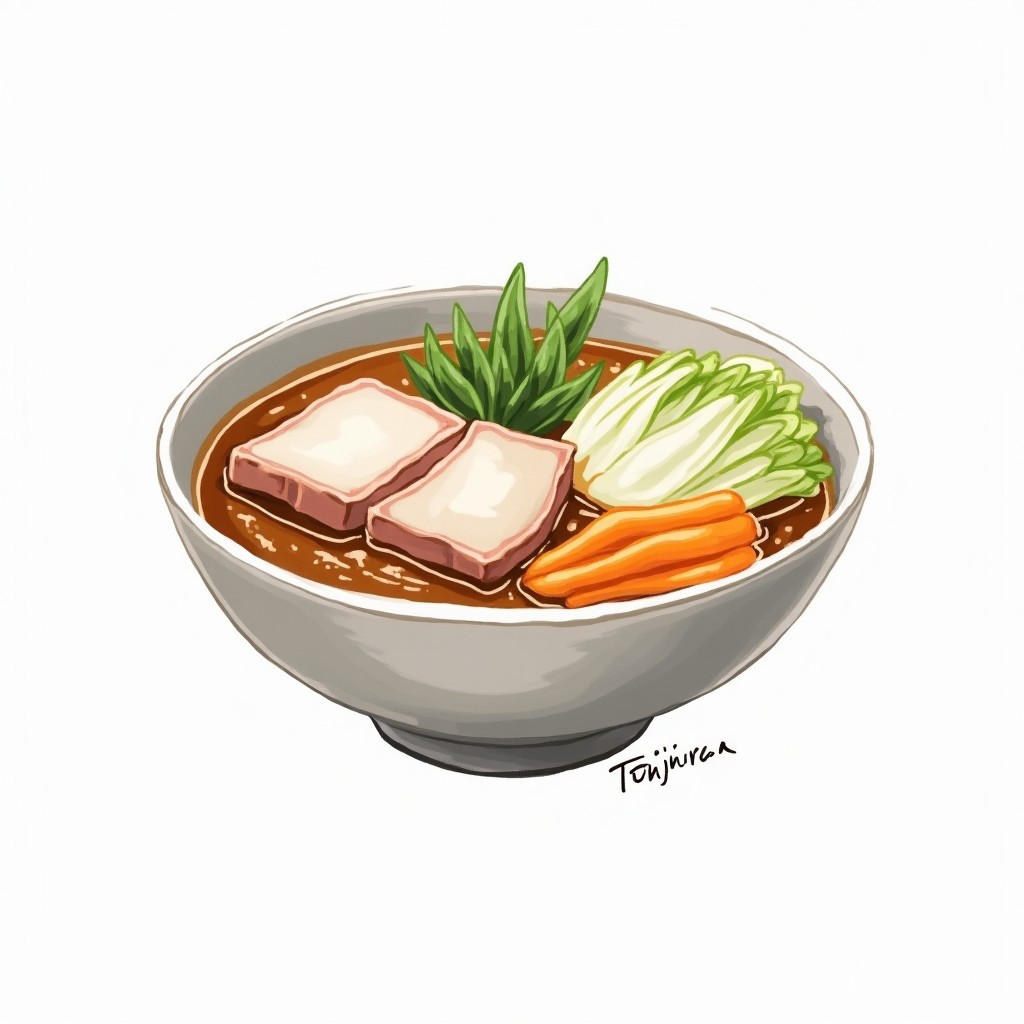
Tonjiru (Pork and Vegetable Miso Soup)
Tonjiru - Hearty Pork and Root Vegetable Miso Soup
This rustic Japanese soup transforms humble root vegetables and pork belly into something deeply satisfying. The vegetables simmer until tender in dashi, absorbing layers of flavor before the miso gets stirred in off the heat — a technique that preserves its delicate complexity.
JapaneseAsianLunchDinnerComfort FoodOne Pot
Ingredients
Main Ingredients
- 9⅝ ozpork belly, sliced and cut into 1-inch pieces
- 8 ozcabbage, cut into bite-sized pieces
- 3½ ozgobo (burdock root)
- 8 oztaro (satoimo)
- 1 onion, halved lengthwise and thinly sliced
- 8⅔ ozdaikon radish, peeled and thinly sliced
- 4⅓ ozcarrot, peeled and thinly sliced
- ½ blockkonnyaku (konjac), rinsed
- 1 Tokyo negi (long green onion), sliced diagonally
- 1 pieceaburaage (deep-fried tofu pouch)
- 1 tspfresh ginger, grated with juice
Soup
- 1 tbsptoasted sesame oil
- 6 cupdashi (Japanese soup stock)
- 6 tbspmiso
- 7 ozmedium-firm tofu, torn into small pieces
Garnish
- 1 green onion, thinly sliced
- shichimi togarashi (Japanese seven spice)(optional)
Instructions
- Warm the sesame oil in a large pot over medium heat until it shimmers and flows easily when you tilt the pan.
- Drop in the pork belly pieces and stir-fry until they lose their raw pink color, about 3-4 minutes. The meat will release some fat, which adds richness to the soup.
- Add the sliced onion and stir-fry until it starts to soften and become fragrant. Don't worry about browning — you want it just tender.
- Toss in the daikon and carrot slices, stirring everything together until the vegetables are well-coated with the rendered fat and oil.
- Add the gobo and taro, mixing them in with the other vegetables. These heartier roots need the longest cooking time.
- Nestle in the konjac, aburaage, and green onion, then pour in the dashi. The liquid should just cover all the ingredients — add a bit more if needed.
- Bring everything to a full boil over medium-high heat, then immediately reduce to a gentle simmer. Use a ladle or spoon to skim off any foam and excess fat that rises to the surface.
- Cover the pot and let it simmer until you can easily pierce the root vegetables with a fork — they should be tender but not mushy.⏱ 15 min
- Remove the pot from heat completely. Place the miso in a fine-mesh strainer and lower it into the soup, using a spoon to work it through the mesh until fully dissolved. This method prevents lumps and preserves the miso's flavor.
- Stir in the grated ginger along with any juice you captured. The residual heat will bloom its aroma without making it harsh.
- Gently fold in the torn tofu pieces. Tearing rather than cutting creates irregular edges that hold onto the soup better than clean cuts.
- Return to medium-low heat just until the soup is heated through — avoid boiling, which can make the miso taste harsh and the tofu tough.
- Ladle into bowls and top with sliced green onions. Pass the shichimi togarashi at the table for those who want a bit of heat.